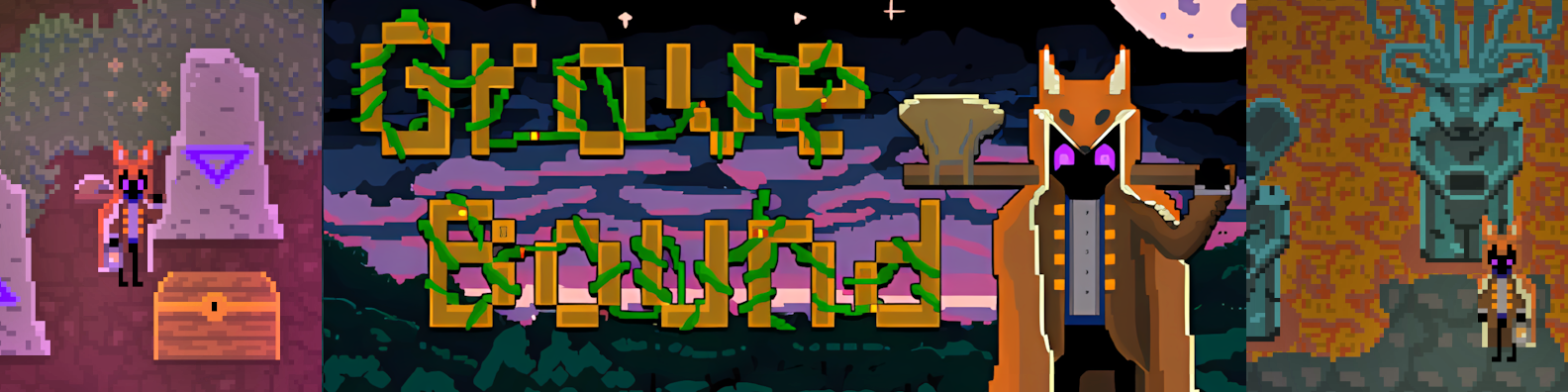
Grove Bound - Ongoing QA Case Study
🧾 Project Overview
- Game: Grove Bound
- Studio: GDO Games
- Credited Role: QA Lead
- Testing dates: Ongoing from 8 June 2026
- Status: In development, with ongoing QA support across builds and updates
- Platform: PC / Browser / itch.io
- Current focus: Onboarding, progression clarity, feature validation, regression testing, and Steam demo readiness
🎯 My QA Role
I am credited as QA Lead on Grove Bound, providing ongoing QA throughout active development and adapting testing priorities alongside the project's development needs.
My initial work focused on onboarding, player guidance, object interaction clarity, progression flow, and the overall first-session experience. More recently, my testing has expanded into targeted quest and progression validation ahead of further content development.
My responsibilities include exploratory QA, player-facing risk identification, test planning, structured reporting, regression testing, quest and feature validation, dialogue quality checks, and practical recommendations to support continued development and future Steam demo readiness.
Developer Feedback
“Kelina is a pleasure to work with. She is hardworking and provides genuine insight into Grove Bound, approaching it from the perspective of a first time player. Her feedback on player onboarding was essential and greatly improved the overall flow through her suggestions.
She is very good at understanding my needs as a developer and turning them into effective test plans. She requires very little supervision and is more than capable of working independently. Her work was always delivered promptly and included excellent breakdowns and documentation. I would highly recommend working with her."
🧠 Triage & Planning
- Aligned testing with current development priorities
- Prioritised player-facing and progression risks
- Defined focused test scope for each pass
- Separated functional issues from clarity and usability concerns
- Planned targeted regression and follow-up testing
- Documented blocked and untested areas
🎮 Testing Focus
- Tutorial and onboarding flow
- Early progression and player guidance
- Quest progression and objective clarity
- Inventory and quest-item interactions
- Puzzle and progression validation
- Resource gathering and crafting
- Cooking and buildable systems
- NPC interaction and dialogue quality
- Feature discoverability
🔁 Ongoing Support
- Regression testing after fixes
- Fix and reproduction validation
- New feature and system validation
- Targeted testing using developer-provided QA saves
- Quest and progression validation
- Continued Steam demo readiness support
🛠️ Workflow & Communication
Testing is carried out through ongoing collaboration with the developer using Discord. Testing priorities are aligned with current development needs, previously identified risks, newly implemented changes, and areas requiring focused validation.
My approach varies depending on the objective of each pass, ranging from first-time-player exploratory testing to targeted regression, feature validation, and quest testing. Developer-provided QA saves are used where appropriate to reach specific progression states efficiently and avoid unnecessary replay.
Findings are delivered through structured QA reports supported by screenshots, video evidence, bug logs, friction logs, and practical recommendations. Follow-up passes are used to validate fixes, check for regressions, and assess whether previously reported concerns have improved.
| Workflow Area | How It Works |
|---|---|
| Communication | Direct Discord communication with the developer. |
| Planning | Testing aligned with current development priorities, known risks, and requested validation areas. |
| Testing | Exploratory testing, targeted regression, feature validation, and quest testing. |
| Test States | Developer-provided QA saves used to reach specific progression points for focused testing. |
| Reporting | Structured reports documenting scope, findings, player impact, and recommendations. |
| Evidence | Screenshots and gameplay recordings used to support findings where appropriate. |
| Follow-up | Fix validation and regression testing across subsequent builds. |
🧭 Onboarding, Progression & Feature Validation
Testing has evolved alongside Grove Bound's development, beginning with broad first-time-player and onboarding evaluation before expanding into regression testing, feature validation, targeted quest testing, and system-level investigation.
Coverage has included onboarding, progression, quest flow, inventory interactions, crafting, cooking, buildable systems, dialogue, save integrity, puzzles, and player-facing usability. Testing priorities have changed between builds based on development needs and previously identified risks.
The timeline below shows how my QA coverage has expanded and shifted alongside the project's development.
| Testing Area | Jun 2026 | Jul 2026 | Aug 2026 |
|---|---|---|---|
| Tutorial & Onboarding | ✓ | — | — |
| First-Session Experience | ✓ | — | — |
| Progression & Player Guidance | ✓ | — | ✓ |
| Quest Validation | ✓ | — | ✓ |
| Inventory & Item Interactions | ✓ | — | ✓ |
| Crafting & Resource Systems | ✓ | — | ✓ |
| Cooking Systems | ✓ | — | ✓ |
| Buildable & Storage Systems | ✓ | — | — |
| Puzzle / Logic Progression | — | — | ✓ |
| Dialogue System & Content Quality | ✓ | ✓ | ✓ |
| Save / Load Integrity | — | ✓ | — |
| Regression & Fix Validation | ✓ | ✓ | — |
✓ Tested during this period — Not tested or not a focus during this period
🗺️ Quest & Progression Testing
As development progressed, my testing expanded into focused validation of existing quest content ahead of further planned content development.
I carried out exploratory quest playthroughs from a first-time-player perspective, testing progression flow, objective clarity, inventory interactions, puzzles, resource gathering, crafting, cooking, and NPC dialogue.
A key part of this testing was evaluating not only whether quest systems functioned correctly, but whether the intended progression could be understood using the information available to the player.
Where progression became unclear, I avoided requesting the intended solution from the developer. Instead, I tested logical player actions, documented the resulting behaviour, and reported where the progression path could not be determined naturally. This preserved the value of the first-time-player perspective and helped identify potential discoverability and guidance issues.
The testing included both successful end-to-end quest validation and investigation of progression friction. Individual systems were tested independently where appropriate to help distinguish between a functional problem and unclear communication of the intended interaction.
Dialogue was also reviewed during these passes for grammar, spelling, punctuation, capitalisation, and formatting issues.
⚠️ Current Player-Facing Risk Areas
| Risk Area | Player Impact |
|---|---|
| Progression Clarity | Players may become unsure how to progress when the intended next action is not sufficiently communicated. |
| System Discoverability | Some systems can be overlooked or misunderstood without sufficient guidance. |
| Feature Communication | Mechanics may function correctly while their purpose or intended use remains unclear. |
| Quest & System Guidance | Players may understand an objective but struggle to identify the required item, interaction, or system needed to progress. |
| Feedback Visibility | Important information can occasionally be easy to miss during normal play. |
| Retention Risk | Repeated uncertainty around progression or system use can interrupt gameplay flow and reduce motivation to continue. |
🤝 Working With the Developer
Testing priorities are agreed collaboratively based on current development needs, active feature work, upcoming testing requirements, and player-facing risks identified during previous QA passes.
As development has progressed, testing has moved from broad first-time-player and onboarding evaluation into more targeted regression, feature, progression, and quest validation. Developer-provided QA saves are used where appropriate to reach specific test states efficiently.
Feedback is reported in a practical way, separating functional defects, progression blockers, usability and discoverability concerns, content-quality issues, and lower-priority observations to support development decisions.
The project remains an ongoing collaboration, with QA priorities continuing to evolve alongside development and future Steam demo readiness.
🧰 Tools & Evidence Workflow
| Tool / Method | Used For |
|---|---|
| PC Testing | Testing development builds and targeted gameplay scenarios. |
| Browser Testing | Testing browser-based builds and player-facing functionality. |
| Developer-Provided Save States | Accessing specific progression points for focused quest and feature testing. |
| Google Docs | QA summaries and structured test reporting. |
| Google Sheets | Bug logs and friction tracking. |
| Discord | Developer communication, testing priorities, and feedback discussion. |
| Screenshot Evidence | Visual issue documentation and supporting evidence. |
| Video Evidence | Capturing gameplay behaviour and reproduction evidence. |
| itch.io | Accessing and testing available project builds. |
✅ What This Case Study Shows
- Ongoing QA Lead responsibility on an actively developed indie project.
- Player-focused exploratory testing from a first-time user perspective.
- Targeted quest, progression, and feature validation using developer-provided test states.
- Identification of onboarding, progression, usability, and discoverability risks.
- Testing of interconnected inventory, crafting, cooking, and progression systems.
- Investigation of progression friction while distinguishing functional issues from unclear player guidance.
- Dialogue and content-quality checks alongside functional gameplay testing.
- Structured QA reporting with defined scope, findings, and player-impact analysis.
- Regression testing and feature validation across multiple development updates.
- Independent testing based on priorities agreed directly with the developer.
- Ongoing contribution to player-experience improvements and future demo readiness.
Need QA Support for Your Game?
If you have a demo, PC build, browser build, update, or release candidate that needs structured QA support, message me with the platform, build, and what you need checked.
📎 Disclaimer
This page documents QA work completed so far by Kelina Cowell for portfolio and recruitment purposes. Grove Bound is still in active development, and this page will be updated as further QA passes are completed. I am not the developer or publisher of Grove Bound. All trademarks, logos, screenshots, clips, graphs, and game assets remain the property of their respective owners. Internal QA details, full bug logs, and private developer communications are not published here. If anything needs to be removed or credited differently, please contact me and I’ll update it promptly.