Back to Articles Hub Game QA Portfolio
Why Players Quit Game Tutorials: Common Onboarding Problems in Games
Players do not always quit tutorials because games are difficult. Sometimes they quit because the onboarding failed to teach them how to play.
Common onboarding problems in games are often mistaken for player mistakes. A tutorial may appear functional from a development perspective, but if players cannot understand movement, interaction, feedback, or recovery systems, the experience can feel difficult for the wrong reasons.
This article uses real game QA portfolio work from Echoes of Delivery, Mind Match, and Infinitavern to examine tutorial onboarding problems, player confusion, unclear system communication, and fake difficulty created by poor onboarding design.
TL;DR
- Players may quit tutorials because systems are unclear, not because the game is genuinely difficult
- Missing instructions, weak feedback, and unclear recovery can block progression before gameplay properly begins
- Good tutorial QA separates real challenge from communication failure
- Echoes of Delivery, Mind Match, and Infinitavern show different types of onboarding friction
When player confusion feels like difficulty
Real difficulty is intentional. It comes from challenge, mastery, timing, decision-making, resource pressure, or player skill. Fake difficulty happens when the player is fighting unclear controls, missing information, weak feedback, or unexplained systems instead of the designed gameplay challenge.
In tutorial testing, this distinction matters. A player failing because they made a poor tactical choice is very different from a player failing because the game never properly explained what an input does, why an action failed, or how to recover from a mistake.
From a QA perspective, fake difficulty is a player-facing onboarding risk. It can make a game feel broken, unfair, or frustrating even when the underlying systems technically function correctly.
Onboarding QA takeaway from my Echoes of Delivery vehicle tutorial passShowing controls is not the same as teaching controls.
Common game tutorial problems that confuse players
Tutorial failure does not always look dramatic. Sometimes the player simply hesitates, clicks the wrong thing, misunderstands a system relationship, or assumes the game is unresponsive.
In my QA portfolio work, the strongest onboarding problems usually fall into a few patterns:
- Controls are shown but not explained
- Inputs fail without feedback
- Interactive elements do not behave the way they visually suggest
- System changes happen without clear cause and effect
- Terminology changes between screens or systems
- Players can get stuck without recovery options
These are not just tutorial polish issues. They affect whether a first-time player can form a usable mental model of the game. If the player cannot understand what they can do, how to do it, and why the game responds in a certain way, they are forced into guess-based play.
Why tutorial clarity matters in game QA
Tutorial QA is not only about checking whether prompts appear or whether progression is technically possible. It is about whether players can form a usable mental model of the game.
A usable mental model answers several core onboarding questions:
- What can I do?
- How do I do it?
- Why did that happen?
- What changed after my action?
- How do I recover if something goes wrong?
When those answers are missing, players start guessing. Guess-based play is especially risky during onboarding because it weakens player confidence before trust in the game has been established.
This is where exploratory game QA becomes more than bug hunting. The issue is not always “this button is broken.” Sometimes the issue is “the game has not communicated enough information for the player to make informed decisions.”
Echoes of Delivery vehicle tutorial example
Echoes of Delivery was tested in Pre-Alpha v0.2.0 on PC. The QA pass focused on vehicle onboarding, recovery, and first-time player control clarity.
The tutorial introduced a driving section, but the player was not clearly taught how to initiate movement, how steering worked, or how to recover if the vehicle became stuck.
The strongest onboarding issue involved the gear system. The control overlay displayed P, R, N, and D, but did not explain their gameplay meaning or interaction behaviour. For players unfamiliar with vehicle gear notation, movement could appear broken or unresponsive rather than incorrectly configured.
Observed issue: The player understood the objective, driving forward, but was not clearly taught the interaction steps required to begin moving successfully.
Player-facing risk: The tutorial could create confusion or progression blocking before the player had learned the basic vehicle controls.
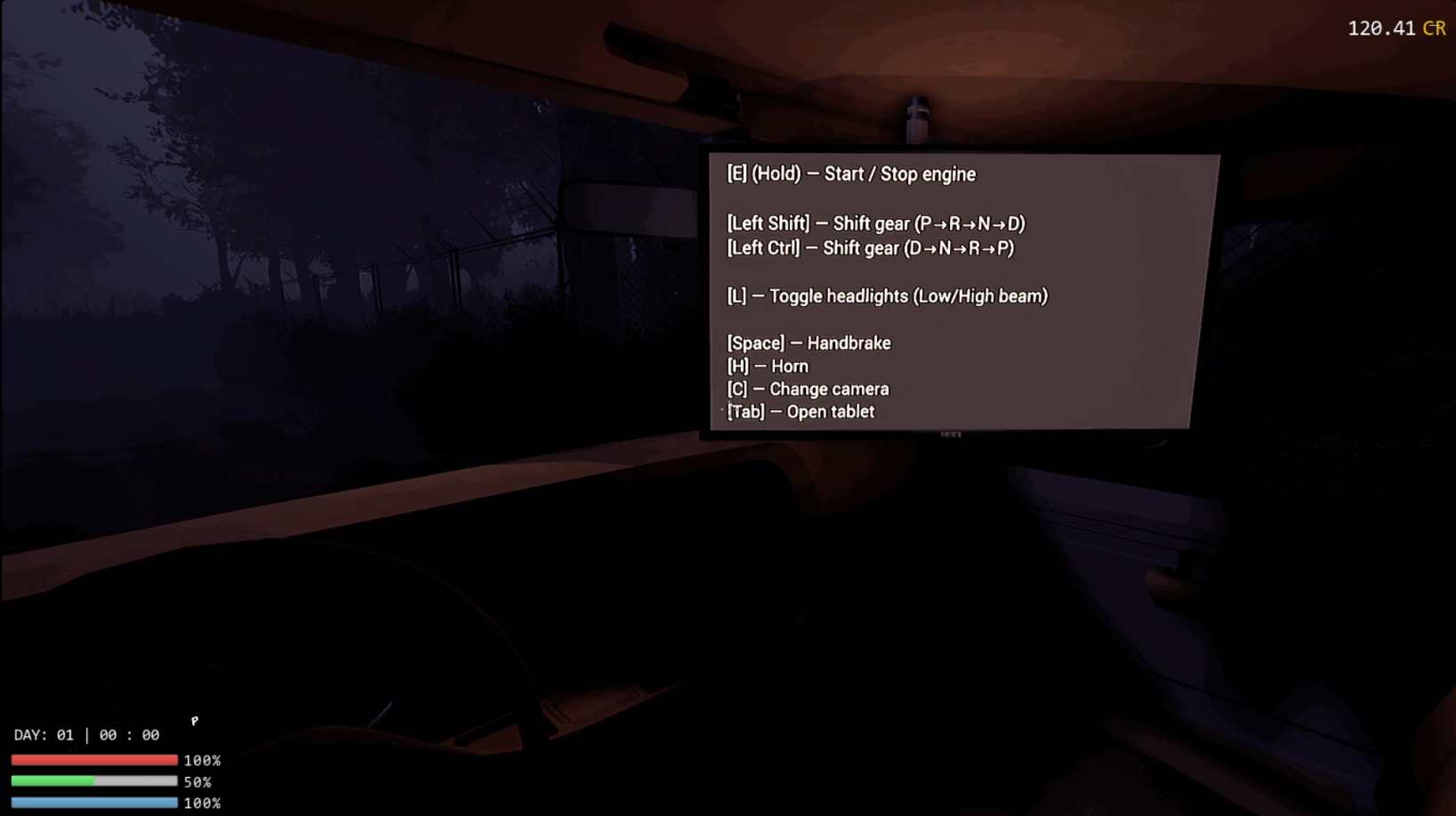
The same pass also found recovery-related risk. The vehicle could become stuck between a fence and bridge, and input attempts to reverse or recover did not reliably resolve the situation. In a tutorial, this is especially serious because the player has not yet built enough system knowledge to understand whether they made a mistake or whether the game has failed.
Echoes of Delivery onboarding risks
|
Mind Match system clarity example
Mind Match was tested on PC with a focus on tutorial clarity, decision-making, and early gameplay readability.
Mind Match showed a different type of onboarding problem. The game did not simply block movement or progression. Instead, it created moments where the player could continue playing while still not fully understanding the systems being introduced.
The first interaction problem appeared on the main menu. The menu visually resembled standard clickable buttons, but the interaction required dragging. According to the developer, multiple players gave up at this stage. That is a high-risk onboarding issue because the player may never reach the actual game.
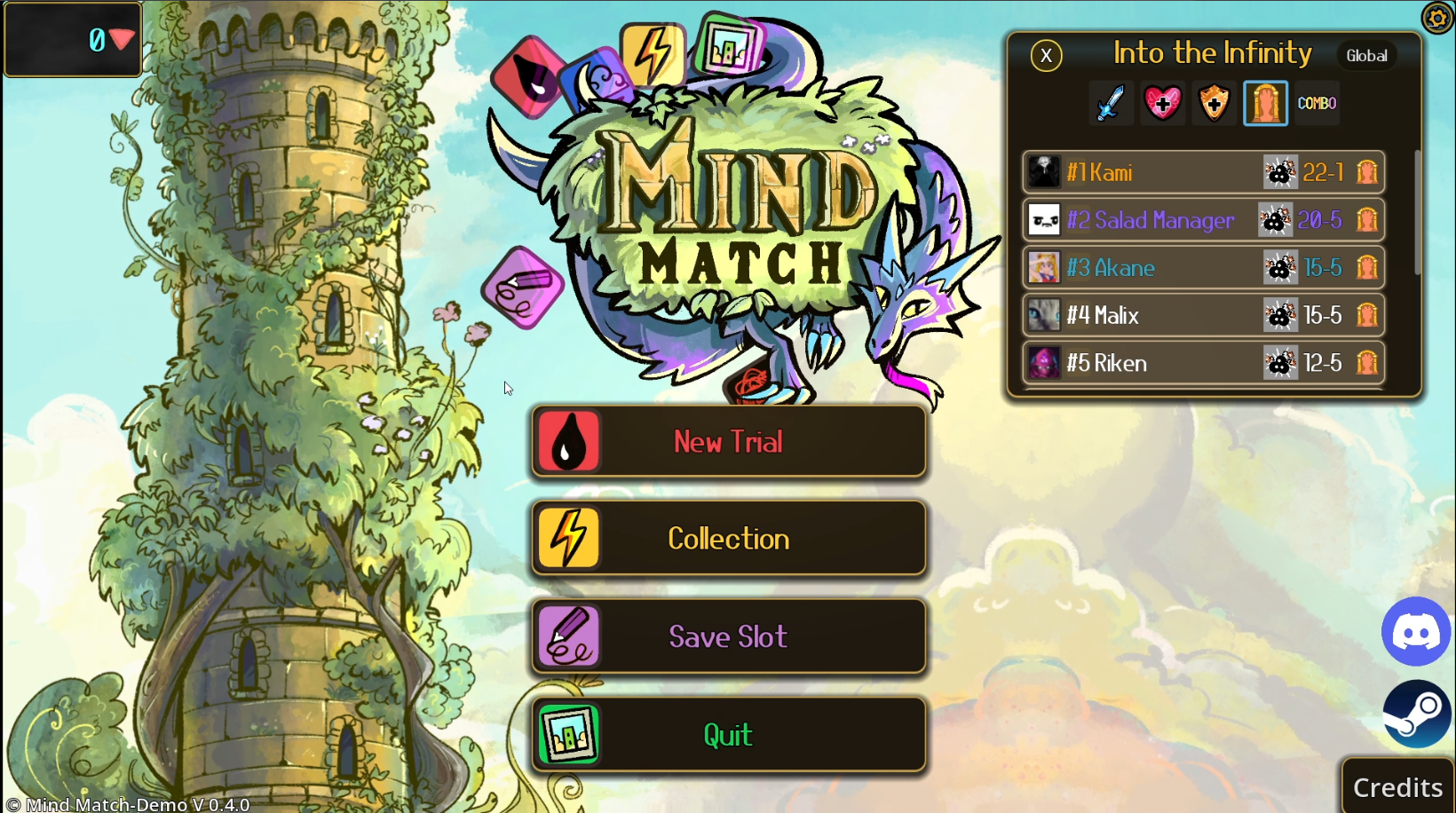
Further into the tutorial and early gameplay, several systems produced decision-making friction. Probability values changed without enough context, hero ability icons changed into numbers without explanation, and terminology shifted between Corrupt, Dark Thought, and Torment. The systems technically functioned, but the player's decision-making became uncertain because system relationships were unclear.
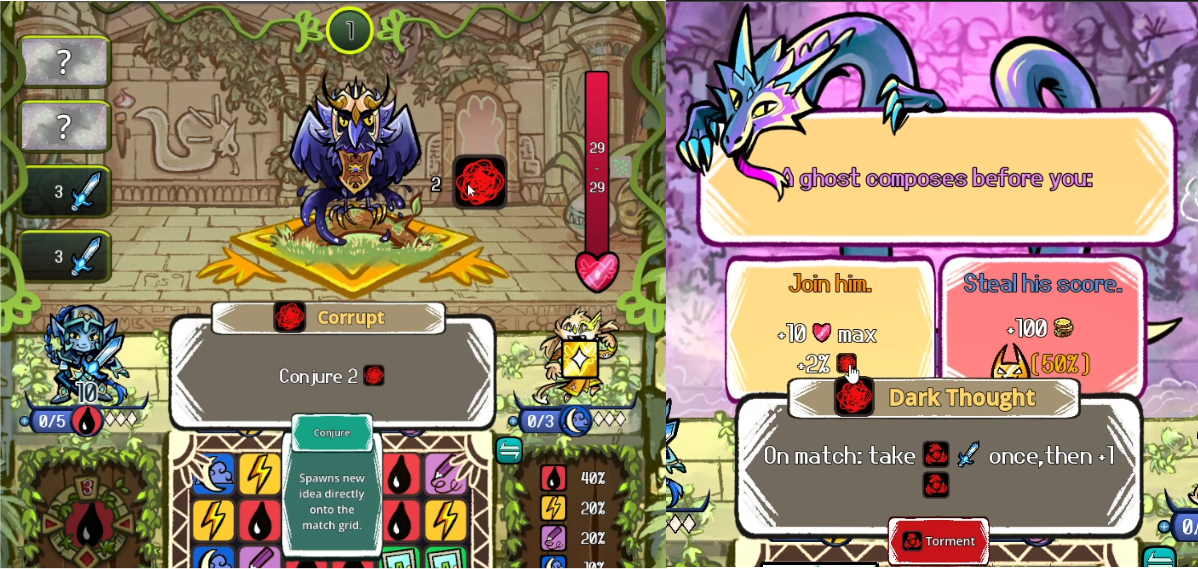
Observed issue: The player had partial understanding of some mechanics, but unexplained symbols, values, and terminology created guess-based decisions.
Player-facing risk: The game could feel more confusing than strategic because the player could not reliably connect actions, feedback, and outcomes.
Infinitavern core loop onboarding example
Infinitavern was tested on PC using the Steam demo, with comparison to the Itch build where relevant.
Infinitavern showed a core loop onboarding issue. On first launch of the Steam demo, coins started at zero and did not appear to increase while idle. Coin gain only occurred through manual interaction, with no clear indication that this was intended.
After relaunching the game, the behaviour changed. Coins began increasing automatically, which made the income system clearer. The problem was not simply that the economy was confusing. The problem was that the first-time player experience communicated a different version of the core loop than a later session.
Infinitavern onboarding example: the first Steam session does not clearly initialise or communicate idle income behaviour, creating confusion around how progression and currency generation work.
Observed issue: First launch did not clearly initialise or communicate idle income, while a later session showed different income behaviour.
Player-facing risk: The player may assume the game is non-functional, slow, or unclear before understanding the earn-and-progress loop.
This matters because first exposure is fragile. If the first session fails to communicate the core loop, players may quit before later behaviour ever has a chance to clarify it.
Why this matters in game QA
Onboarding issues are especially dangerous because they happen before players decide whether the game is worth continuing. A confusing tutorial can cause players to quit before they experience the intended mechanics, progression systems, atmosphere, or challenge.
For developers, this means tutorial QA should test more than functionality. It should test comprehension. Can first-time players understand the core interaction without prior knowledge? Can they recover from mistakes? Can they connect their actions to visible gameplay outcomes?
For QA testers, this type of analysis demonstrates player empathy, systems thinking, onboarding awareness, and communication clarity. It shows the ability to identify why confusion happens and explain the player-facing impact in a way developers can act upon.
The goal of onboarding QA is not to make games easier. The goal is to ensure players are challenged by the intended gameplay systems rather than by missing information and unclear communication.
Game Tutorial Onboarding FAQ
What are common onboarding problems in games?
Common onboarding problems include unclear controls, weak tutorial feedback, inconsistent terminology, unexplained systems, missing recovery options, and interactions that force players to guess instead of making informed decisions.
Why do players quit game tutorials?
Players may quit tutorials when they feel confused, blocked, overloaded, or unsure whether the game is responding correctly. If onboarding fails to explain core interactions clearly, players may assume the game is broken or not worth continuing.
How do QA testers test game onboarding?
QA testers evaluate whether first-time players can understand what to do, how to do it, why actions succeed or fail, and how to recover from mistakes. Effective onboarding QA focuses on player comprehension rather than only checking whether progression technically works.
What is fake difficulty in games?
Fake difficulty happens when players struggle because systems are unclear rather than intentionally challenging. Poor onboarding, unclear feedback, and unexplained mechanics can create frustration that feels like difficulty even though the core gameplay itself is not demanding.
Why is first-time player experience important in QA?
First-time player experience is important because players make early judgements about whether a game is understandable, responsive, and worth continuing. If the opening tutorial creates confusion, players may quit before reaching the strongest parts of the game.
Related Game QA work
Contact me about game QA testing Connect on LinkedIn Browse more game QA testing articles