Game QA Learning Projects
Foundational Game QA projects showing early practice with test cases, bug reports, exploratory testing, and evidence-based documentation.

This section showcases early QA projects focused on foundational skills such as bug reporting with clear reproduction steps, structured test cases, and both structured and exploratory testing across multiple platforms.
These projects are small, timeboxed QA exercises with defined scope, supported by basic workbooks (test cases, session notes, and bug tracking) and occasional evidence clips.
The focus is on developing QA judgement: learning how to identify issues, understand system behaviour, prioritise findings, and communicate them clearly in a structured way.
QA Skills Developed
- Basic bug reporting with clear reproduction steps
- Structured test case creation and simple QA workbooks
- Exploratory testing using guided charters
- Introduction to regression testing and verification
- Awareness of accessibility considerations (APX patterns)
- Testing across different platforms (PC, mobile, VR)
Example Findings from Early QA Projects
-
Payment Failure Breaks Core Game Loop
Identified an issue where payment input is accepted but applies inconsistently across customers, blocking progression. Consistently reproducible during testing.
-
Controller Input Break After Keyboard Interaction
Observed a control flow issue where triggering Join from Pause via keyboard disables controller input, highlighting input ownership inconsistencies.
-
Subtitle Occlusion Blocks Dialogue
Identified a UI overlap issue where a backpack popup covers subtitles, impacting readability and player understanding.
Early QA Projects Lineup
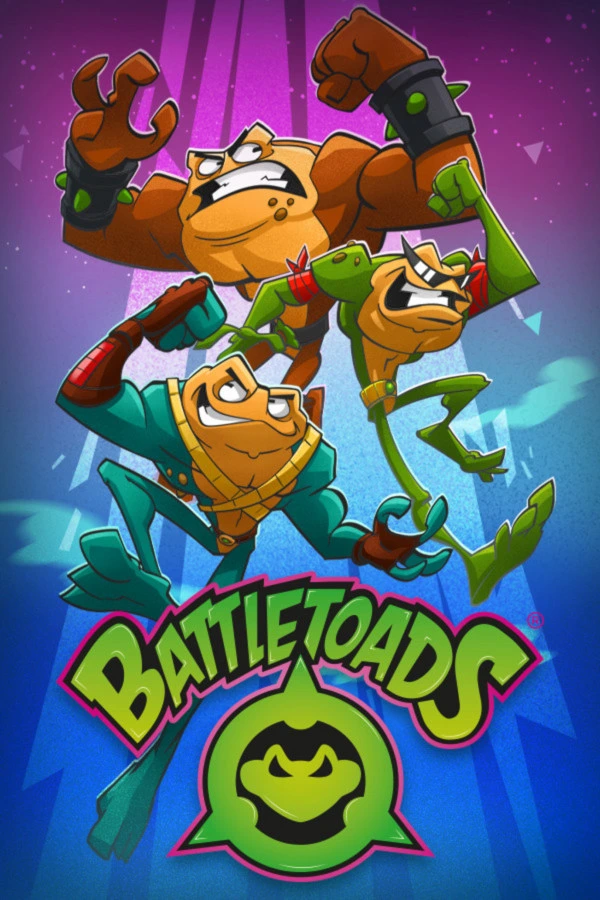
1: Functional Testing - Battletoads (PC)
Functional test pass on Battletoads (PC Game Pass) to validate the core loop and surface repeatable bugs, with extra attention on keyboard to controller hand-off.
- Goal: Practise structured functional QA by checking core gameplay, menus and local co-op, and catching clear, reproducible defects.
- Focus: Pause / Join-In / Resume flows, controller ownership and hand-off, local co-op edge cases, menu navigation, on-screen prompts, and basic audio/performance sanity.
- Interesting result: Overall build felt stable but surfaced four high-impact input and hand-off defects, all 100% reproducible with clear steps and video.
- Evidence: Google Sheets QA workbook (cases, notes and PDF export), Jira issue tracking, and Xbox Game Bar plus OBS repro clips uploaded to YouTube.
- Why this game? A fast, recognisable brawler with drop-in local co-op, perfect for testing input ownership, pause behaviour and join-in flows under pressure.

2: Charter-based Exploratory & Edge-Case Testing - Rebel Racing (Mobile)
One-week exploratory / edge-case pass on a live F2P mobile racer, scoped to a single Android device.
- Goal: Practise charter-based mobile QA with daily golden-path smoke tests plus targeted edge-case sessions.
- Focus: Interruptions and recovery, LTE vs Wi-Fi, UI scaling and readability, input responsiveness, performance and device feel, and basic network / live surfaces (Store and Events).
- Interesting result: Found a post-race rewards soft lock after an OS alarm plus app close, plus smaller risks around LTE load delays and HUD readability.
- Evidence: Moto g54 recordings (scrcpy/OBS) and a Google Sheets workbook with charters, bug log and STAR summary.
- Why this game? A busy, live-service mobile racer with timers, pop-ups and network calls, ideal for practising interruption handling and real-world device edge cases.

3: Regression Testing - Sworn (PC Game Pass)
One-week change-driven regression pass on a recent Sworn patch, scoped to golden-path stability and patch-note fixes.
- Goal: Practise disciplined regression work by validating fixes, checking must-not-break systems, and catching side effects early.
- Focus: Save and load integrity, session start and quit flows, stamina and quest behaviour after fixes, and UI readability around low-health and stats.
- Interesting result: Confirmed a key fix held, resurfaced a persistent death-flow issue, and found minor UI feedback risks during core gameplay loops.
- Evidence: Regression matrix, Jira bug log, OBS recordings for before and after checks, and a STAR summary for key defects.
- Why this game? Sworn is patched often and has many interconnected systems, making it ideal for practising real change-driven regression instead of static case execution.

4: VR Comfort and Accessibility - Shadow Point (Quest 3)
One-week, charter-driven VR comfort and accessibility pass on Shadow Point (Quest 3 standalone, build 1.4), scoped to seated play in the tutorial and early chapters.
- Goal: Practise structured VR comfort and accessibility testing using established XR guidance, and document issues with clear evidence and traceability.
- Focus: Camera behaviour and horizon stability, locomotion and turning comfort, seated reach and motor strain risk, subtitle legibility and occlusion, non-audio cue redundancy at volume 0, and early-room cognitive barriers.
- Interesting result: Most issues clustered around subtitle occlusion and behaviour, plus confirmation gaps when audio cues were removed, showing how quickly comprehension can break in headset.
- Evidence: Charter Matrix, Session Log (S-001 to S-020), Bug Log (11 issues), STAR summary, glossary, and linked media evidence.
- Why this game? A slow paced VR puzzler where comfort surfaces, text distance, and interaction clarity show up clearly without fast combat noise.
Read the Shadow Point VR comfort and accessibility case study →
5: Early Build QA - Core Loop & System Interaction - The Chef’s Shift (PC)
Early build QA case study on The Chef’s Shift (Refined Taste v0.1.2a), focused on validating core loop stability, input reliability, and system interaction under time pressure in a fast-paced restaurant simulation environment.
- Goal: Evaluate whether the core gameplay loop (prepare → queue → serve → collect payment → repeat) remains stable and consistent under pressure, with attention on reproducible defects affecting order handling, interruptions, and player input.
- Focus: Order fulfilment accuracy and timing, typing input reliability under pressure, tray capacity and dish management, transitions between cooking, serving, cashier, and interruption states (e.g. competitor encounters), and UI vs actual system state.
- Interesting result: Core loop instability under pressure, with payment behaviour becoming inconsistent across multiple customers. Issues were not limited to input failure but revealed state inconsistency during concurrent interactions, showing how system behaviour degrades under load.
- Planned deliverables: Charter-based session notes, bug log with clear reproduction steps, short video evidence of core loop and transition failures, and a STAR-style summary of key defects and risks.
- Why this game? The Chef’s Shift combines rapid input, multi-step task execution, and overlapping systems (orders, preparation, interruptions, and payment) within short, repeatable sessions, making it well suited for testing core loop integrity and system interaction in an early-stage build.
Read the The Chef's Shift Core Loop and System Interaction case study →
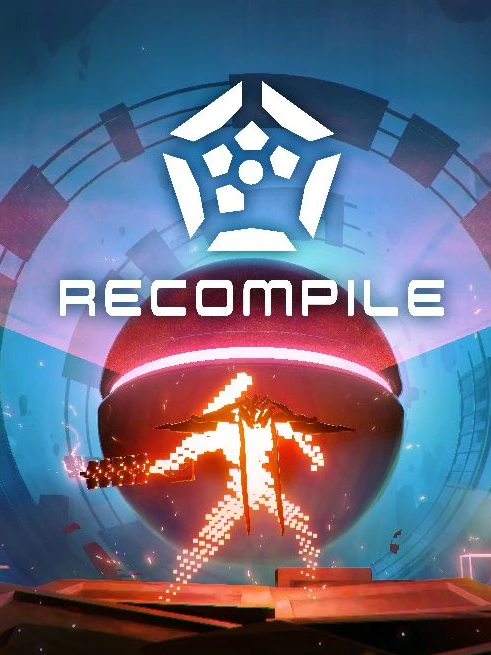
6: Multi-Input / Controller Parity QA - Recompile (PC)
Planned controller parity case study on Recompile (PC Game Pass), focused on input feel, mapping clarity and basic hot-swap handling.
- Goal: Practise structured controller QA by checking responsiveness, mapping accuracy and parity across two Xbox-style controllers.
- Focus: Input latency and feel, dead zones and drift, button and axis parity, Xbox prompts and icons, hot-swap behaviour and simple rebinding checks.
- Planned deliverables: Small input-response matrix, short latency notes, prompt and binding screenshots, and a STAR-style summary of key findings.
- Why this game? Recompile’s fast movement and frequent mode switches make it a good stress test for subtle input mismatches, latency spikes and inconsistent prompts.
Case study coming soon.

7: Narrative / Localisation QA - Oxenfree (Mobile)
Planned narrative and localisation QA pass on Oxenfree (Netflix Games, Android), focused on subtitle timing, tone and readability.
- Goal: Practise LQA-style testing by checking subtitle timing, readability and tone consistency, and logging issues in a localisation-friendly format.
- Focus: English subtitles and UI text only, including pacing vs VO, line breaks and overflow, speaker attribution, sensitive phrasing and UI legibility on a mobile screen.
- Planned deliverables: Short subtitle and tone report, simple readability checklist, and an LQA-style issue log with full lines, context and screenshots or clips.
- Why this game? Oxenfree’s walk-and-talk dialogue, radio tuning and branching story make timing, tone and readability critical, so it is ideal for practising narrative and localisation QA on mobile.
Case study coming soon.
8: UI / UX & Feedback Clarity QA – [Game TBC]
Planned short-form case study focused on UI clarity, HUD readability, and feedback consistency under pressure in a fast-paced PC game environment.
- Goal: Evaluate how clearly the game communicates player actions, system responses, and success or failure states, especially during fast or high-pressure gameplay.
- Focus: HUD readability, prompt visibility and contrast, feedback clarity (visual, audio, and animation), error and failure messaging, and information hierarchy during multitasking or rapid input.
- Planned deliverables: UI clarity checklist, short stress-testing sessions, targeted bug log with clear player-impact evidence, annotated screenshots, and a STAR-style summary focused on player understanding and usability risks.
- Why this project? Many player-facing issues are not technical failures but clarity failures. This project focuses on identifying where players struggle to understand what is happening or what to do next, particularly under pressure.
- Project context: A PC title with active HUD, prompts, and real-time feedback systems, chosen to expose clarity, readability, and usability issues during normal and high-intensity play.
Case study coming soon.

9: Automation Testing - PowerWash Simulator 2 (PC)
Planned first automation case study on PowerWash Simulator 2, focused on simple smoke scripts and fast re-checks of core flows.
- Goal: Show early automation value by building small, repeatable checks that quickly re-validate core flows and settings after changes.
- Focus: Launch to menu to job select smoke path, settings persistence, basic save and load behaviour, and simple scripted input sequences for sanity checks.
- Planned deliverables: Lightweight smoke scripts, a small regression checklist, short clips of automated runs and a few comparison screenshots.
- Why this game? Clear, repeatable cleaning loops and stable menus make PowerWash Simulator 2 a low-risk candidate for early automation and fast regression passes.
Case study coming soon.
10: Solo QA Workflow (Capstone) - [TBD Indie PC Game]
Planned portfolio capstone, acting as a solo QA workflow on a small indie PC title and combining everything from Projects 1–8.
- Goal: Prove end-to-end QA capability as the only tester, from smoke tests and exploratory charters through to regression, accessibility checks and a final recommendation.
- Focus: Core loop stability, menus and settings, save and load behaviour, early to mid progression, basic accessibility and UX, input parity (KBM and controller) and light performance sanity.
- Planned deliverables: Small set of charters, bug log with evidence, simple regression checklist, brief process write-up and a release-style QA recommendation.
- Why this project? Designed as the final piece of the portfolio, showing how I would work as the sole QA on a small indie team and pull together functional, exploratory, regression, accessibility and input checks into one coherent workflow.
Case study coming soon.
Coverage Map
Overview of early QA projects, showing platforms, QA approaches, and areas explored during foundational testing work.
| Project | QA Approach | Platform | Focus Area | Status |
|---|---|---|---|---|
| Battletoads | Functional Testing Practice | PC (Game Pass) | Core flows · Input ownership · UI/menus | Complete |
| Rebel Racing | Exploratory & Edge-Case Practice | Mobile | Scaling · Touch · Interruptions · Network | Complete |
| Sworn | Regression Testing Practice | PC (Game Pass) | Save/load · Input mapping · UI scaling | Complete |
| Shadow Point | VR Comfort & Accessibility Practice | Quest 3 | Comfort · Tracking · Subtitle legibility | Complete |
| The Chef's Shift | Core Loop & System Interaction Practice | PC | Core loop · Input reliability · System interaction | Complete |
| Recompile | Controller & Input Practice | PC / Controller | Mapping parity · Latency · Prompts | Planned |
| Oxenfree | Narrative / Localisation Practice | Mobile | Subtitles · Timing · Readability | Planned |
| [TBC PC Game] | UI / UX Clarity Practice | PC | HUD readability · Prompts · Feedback | Planned |
| PowerWash Simulator 2 | Automation Basics | PC (Game Pass) | Smoke scripts · Regression checks | Planned |
| [TBC Indie PC Game] | End-to-End QA Workflow Practice | PC | Charters · Bug log · Regression checks | Planned |
Early QA Projects FAQ
What do these early QA projects include?
These projects include foundational QA practice such as bug reports, structured test cases, exploratory testing sessions, and basic regression checks across PC and mobile games.
What QA skills are demonstrated in these projects?
The projects demonstrate core QA fundamentals including functional testing, exploratory testing, basic regression testing, and clear bug reporting with reproducible steps.
What level are these QA projects aimed at?
These projects represent early-stage QA learning and are designed to demonstrate foundational skills and structured thinking as part of skill development.
Are these real QA projects or training work?
These are self-directed learning projects created during QA training. They use real games and builds but are focused on developing and demonstrating core QA methods rather than production-level testing.
How are bugs documented in these projects?
Bugs are documented with clear reproduction steps, expected vs actual results, and basic severity assessment. Some projects include supporting screenshots or video evidence.
How was testing approached in these projects?
Testing was guided by structured learning goals, focusing on understanding core systems, identifying issues, and practicing documentation rather than full production coverage.
Does this section include accessibility testing?
Some projects may touch on accessibility considerations, but dedicated accessibility testing is more fully demonstrated in the main QA portfolio.
Where should I start if I want to see current QA work?
For production-style QA work, visit the main QA Portfolio. This section is best viewed as background showing how foundational QA skills were developed.
🛠️ Tools Used
QA tools used for manual game testing, bug tracking, documentation, and evidence capture.
- Jira
- GitHub
- Google Sheets (QA workbooks)
- OBS Studio
- Xbox Game Bar
- YouTube (evidence hosting)
- scrcpy (Android)
- Meta Quest built-in recording
- HTML (basic)
- CSS (basic)
🎯 Skills
Manual QA across PC, mobile, and VR. Clear bug reporting, evidence capture, and structured documentation.
- Functional testing
- Exploratory testing (charter-based)
- Regression testing
- Smoke testing
- Risk-based test design
- Core loop validation (gameplay flow testing)
- System interaction testing (multi-system state validation)
- Input reliability testing (typing, targeting, correction)
- Failure and recovery testing
- Pressure and overlap scenario testing
- Bug reporting (repro steps, expected vs actual)
- Severity and priority triage
- Test documentation (workbooks, matrices, session logs)
- Evidence capture (clips and screenshots)
- Mobile interruptions and recovery
- VR comfort and accessibility testing
- Narrative and localisation QA basics
- Input and controller testing
Summary
I’m a Game QA tester who built foundational experience across PC, mobile, and VR through structured practice projects focused on core gameplay systems and player-facing issues.
Each project was scoped as a small, timeboxed QA exercise to develop key skills such as identifying issues, writing clear reproduction steps, and documenting findings with supporting evidence.
The work focused on understanding how systems behave under normal gameplay conditions, recognising where issues occur, and improving clarity and structure in QA reporting.