Back to Articles Hub Game QA Portfolio
Why Unclear System Feedback Breaks Player Trust in Strategy Games
Strategy games do not need to explain every calculation in full. They do need to communicate enough information for players to understand why the game state changed.
When population values, building values, decision outcomes, and event feedback are unclear, players stop reading the system as strategy. They start reading it as guesswork.
This article uses real game QA portfolio work from Stamperor to examine unclear system feedback, confusing bracket values, weak cause-and-effect communication, and how unreadable strategy systems can damage player trust.
TL;DR
- Strategy games rely on player trust in system feedback, not just functional calculations
- Unexplained values force players to guess what changed, why it changed, and what to do next
- Decision outcomes need clear cause-and-effect feedback to support informed player choices
- Good strategy game QA tests whether players can understand system state, not just whether numbers update
When complexity becomes unreadability
Complexity can be one of the best parts of a strategy game. Players often enjoy managing trade-offs, reacting to events, protecting resources, and making decisions under pressure.
The problem begins when complexity becomes unreadability. If the player cannot understand what a value means, why it changed, or how a decision affected the system, the game stops feeling strategic.
From a QA perspective, unclear system feedback is not just a UI issue. It is a player-trust issue. The player needs to believe that the game is showing enough information for decisions to feel informed rather than random.
System feedback QA takeaway from my Stamperor demo passA strategy system can be functional and still fail if the player cannot understand what the numbers are telling them.
Common system feedback problems in strategy games
System feedback problems do not always look like obvious bugs. Sometimes the values update correctly, the event resolves correctly, and the decision technically applies correctly. The issue is that the player cannot confidently interpret the result.
In strategy game QA, high-risk feedback problems often include:
- Values changing without explanation
- Positive and negative bracket values with no clear definition
- Decision outcomes that do not visually align with displayed values
- Event consequences that require player inference rather than clear feedback
- Hidden or layered values affecting visible results
- UI instructions that do not match actual input behaviour
These issues matter because strategy games depend on informed decision-making. If players cannot understand the current state of the system, they cannot confidently plan around it.
Why strategy games depend on system trust
Strategy games ask players to make decisions based on information. That information may include population, buildings, resources, event effects, risk, damage, recovery, and long-term consequences.
When the game communicates those systems clearly, players can form a mental model. They can predict consequences, compare options, and understand why a choice succeeded or failed.
When the feedback is unclear, players are forced into guess-based play. That creates a different kind of difficulty. The challenge no longer comes from planning or trade-offs. It comes from trying to decode the interface.
A useful strategy game QA pass asks:
- Can the player understand what changed after an event?
- Can the player connect a decision to its visible outcome?
- Are positive and negative values defined clearly?
- Do displayed values match player expectation after a choice?
- Does the UI explain temporary, damaged, incoming, or hidden states?
- Does input behaviour match the instruction shown on screen?
Stamperor earthquake feedback example
Stamperor was tested in Demo Hotfix v0.0.5 on PC. The QA pass focused on system update visibility, bracket value behaviour, decision outcome clarity, and end-of-cycle input stability.
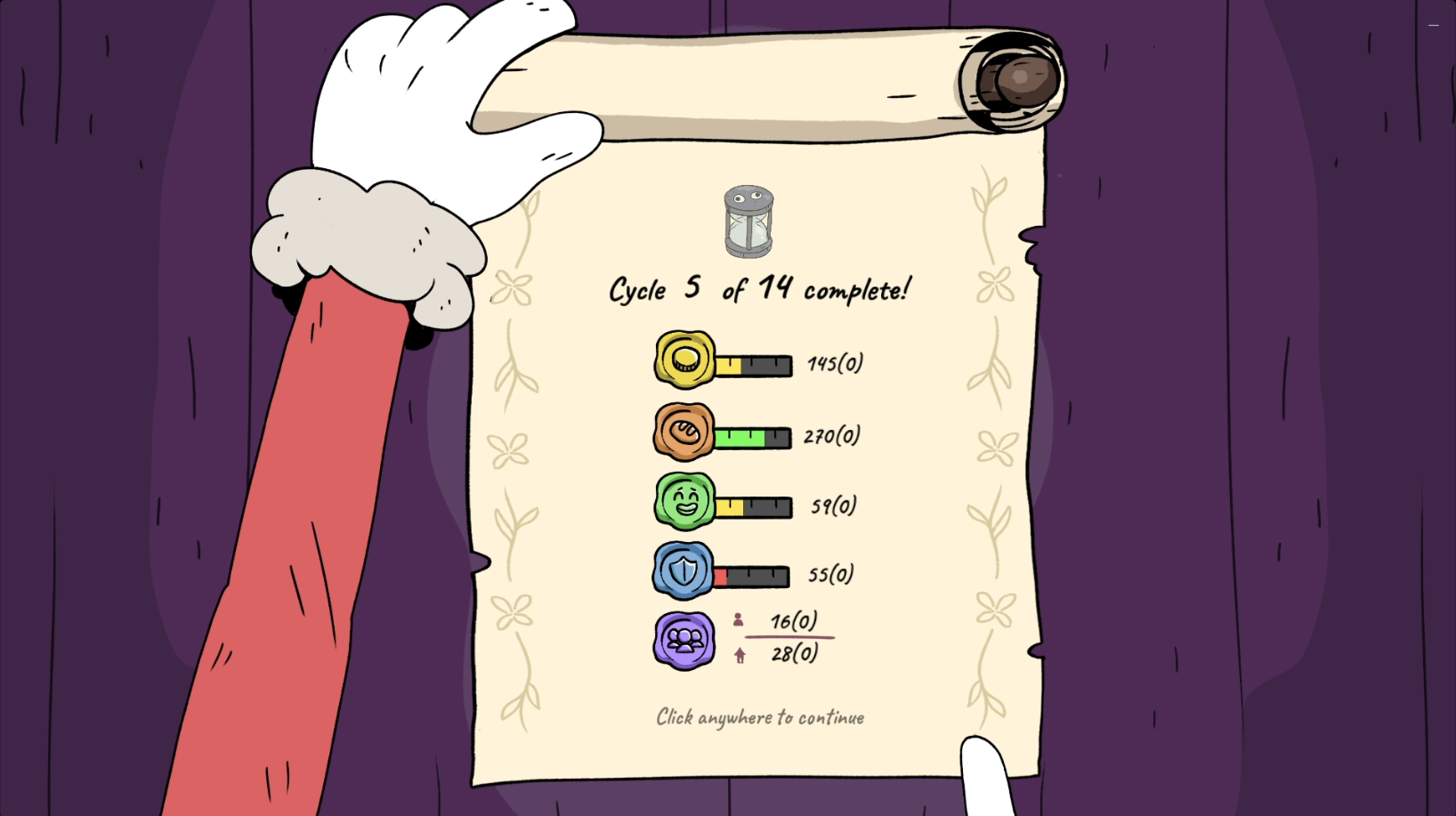
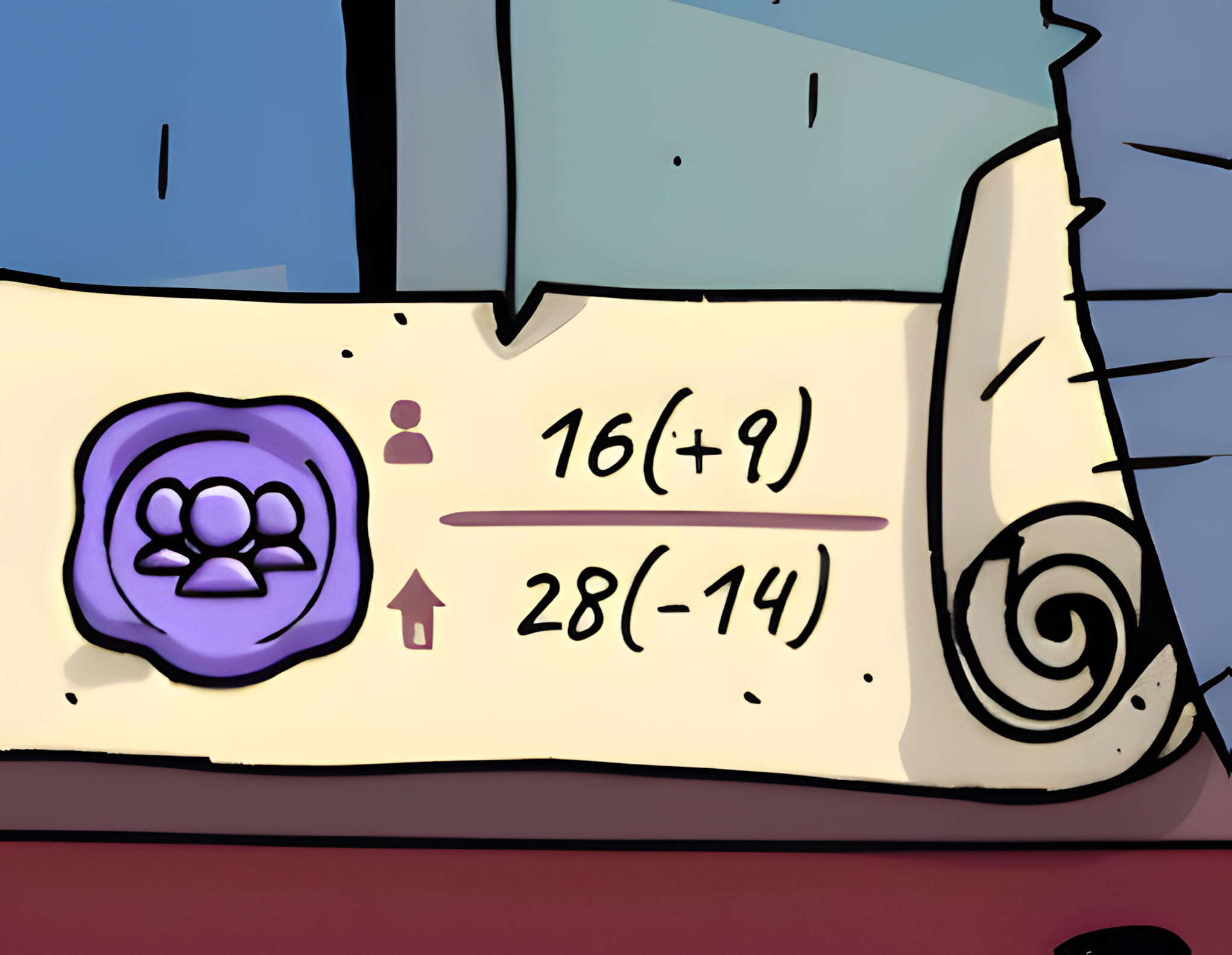
One system clarity issue appeared after an earthquake event. Population and building values changed, and bracketed numbers appeared after destruction.
The values appeared consistently, but their meaning was not explained. Buildings showed a negative bracket value, likely indicating damaged or unusable buildings. Population showed a positive bracket value, but the meaning was unclear.
Observed issue: Bracket values appeared after destruction events, but the UI did not explain whether they represented loss, damage, temporary state, recovery, or incoming change.
Player-facing risk: The player cannot confidently interpret core system state after a major event, leading to hesitation and guesswork in decision-making.
Post-earthquake system feedback risk
|
This matters because the earthquake is not just a visual event. It affects survival systems. If the player cannot understand how population and buildings changed after destruction, they cannot make confident follow-up decisions.
Stamperor decision outcome example
The strongest system feedback issue appeared during a population decision. The decision text indicated a population change of “Allow people to leave -15.”
Before the decision, the visible population value showed 5 (+7). After the decision, the visible value showed 5 (-8). The system may have been applying layered values correctly, but the visible feedback did not clearly communicate how the stated -15 outcome connected to the displayed result.
Observed issue: The decision outcome did not clearly align with the visible population values before and after selection.
Player-facing risk: The player cannot confidently understand how decisions affect core systems, making future choices feel unreliable.
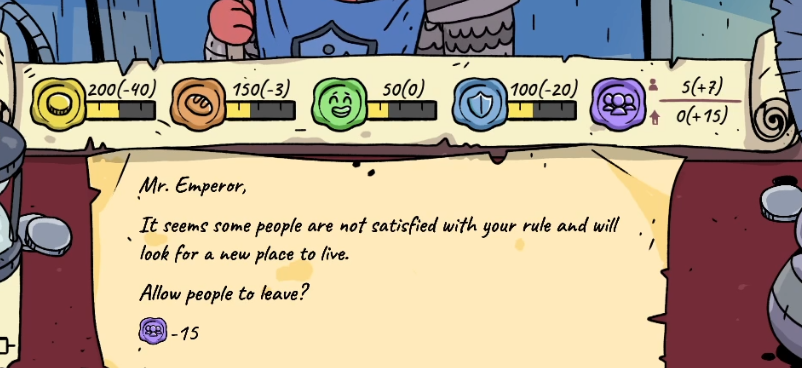
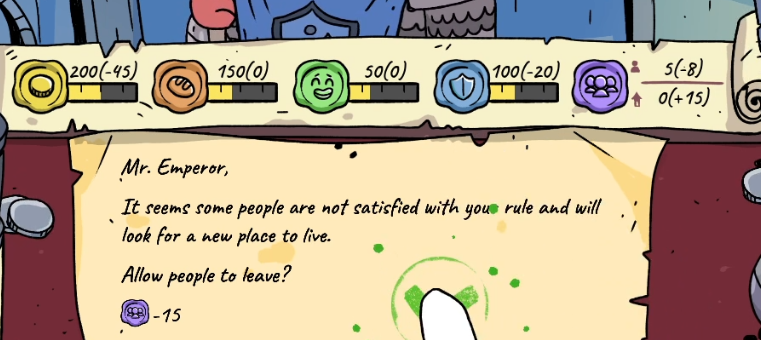
This is where system feedback becomes a trust issue. The player sees a stated decision consequence, then sees a result that requires interpretation. If the player cannot connect the choice to the visible outcome, future decisions may feel less strategic and more like trial and error.
Stamperor end-of-cycle input example
Stamperor also showed a separate end-of-cycle input issue. The screen instructed the player to click anywhere to continue, but input did not respond reliably.
ESC had no effect. Mouse input was delayed or inconsistent. In one test, repeated clicking eventually returned the player to the main menu instead of continuing to the next cycle. In a later check, the interaction could trigger an unintended language menu and lead to a soft lock requiring forced closure.
Observed issue: The end-of-cycle screen did not respond consistently to expected input and could transition to the wrong state or become unresponsive.
Player-facing risk: The player may lose progression trust because the instruction shown on screen does not match the actual interaction behaviour.
End-of-cycle input risk
|
This issue is different from the value clarity problems, but it belongs in the same wider trust discussion. The screen tells the player what should happen. The game then behaves differently. That mismatch weakens confidence in the interface.
Why this matters in game QA
System feedback matters because players use visible information to make decisions. In a strategy game, unclear numbers are not just presentation issues. They directly affect planning, confidence, and perceived fairness.
When feedback is unclear, players may stop trusting the relationship between action and outcome. That shift matters. A difficult decision can feel satisfying when the player understands the trade-off. An unclear decision feels unreliable because the player cannot tell what the game is doing.
For developers, strategy game QA should test more than whether values update. It should test whether players can understand what the values mean, why they changed, and how decisions affect future state.
For QA testers, this kind of testing demonstrates systems thinking, player empathy, cause-and-effect analysis, UI readability judgement, and the ability to explain why a technically working system may still fail from the player's perspective.
The goal of strategy game QA is not to remove complexity. The goal is to make complex systems readable enough that players are challenged by decisions, not confused by unexplained feedback.
Strategy Game System Feedback FAQ
Why does unclear system feedback break player trust?
Unclear system feedback breaks player trust when players cannot understand what changed, why it changed, or how their decisions affected the game state. If values update without clear explanation, players may feel that the system is unreliable or arbitrary.
What are common strategy game UI problems?
Common strategy game UI problems include unexplained values, unclear positive and negative modifiers, hidden calculations, weak event feedback, confusing decision outcomes, and interface instructions that do not match actual behaviour.
How do QA testers test strategy game system feedback?
QA testers test strategy game system feedback by comparing values before and after events, checking whether decision outcomes match visible results, validating whether modifiers are explained, and assessing whether players can understand cause and effect without guessing.
Why are clear decision outcomes important in strategy games?
Clear decision outcomes are important because strategy games rely on informed choice. If a decision says one thing but the visible system state appears to show something else, players may lose confidence in future decisions.
What is guess-based play in strategy games?
Guess-based play happens when players make decisions without enough readable information to understand the likely result. This can make a strategy game feel confusing rather than challenging, especially when core values and consequences are not clearly communicated.
Related Game QA work
Contact me about game QA testing Connect on LinkedIn Browse more game QA testing articles