Back to Articles Hub Game QA Portfolio
Why Unclear Ability Systems Break Player Understanding in Games
Ability systems do not need to be simple for players to understand them. They do need to communicate enough information for players to identify what triggered, why it triggered, and which system caused the outcome.
When abilities, passives, build systems, rituals, and overlapping gameplay effects are unclear, players stop reading the experience as strategy or mastery. They start reading it as guesswork.
This article uses real game QA portfolio work from Runic Tower and Cult of PiN to examine unclear ability systems, hidden passive mechanics, inconsistent build behaviour, overlapping effects, and how unreadable gameplay systems can damage player understanding.
TL;DR
- Players struggle when ability systems do not clearly communicate source, ownership, or activation behaviour
- Hidden passive mechanics weaken player learning and build understanding
- Build systems become unreliable if selected abilities do not load consistently
- Overlapping effects can make stable systems feel unclear when players cannot identify trigger source
When complexity becomes unreadability
Complex ability systems can be rewarding. Players often enjoy experimenting with builds, combining effects, discovering synergies, and learning how gameplay systems interact.
The problem begins when the systems stop communicating clearly. If the player cannot identify which system caused an effect, whether an ability triggered correctly, or how a build is functioning, the game stops feeling strategic.
From a QA perspective, this is not just a UI issue. It is a player-understanding issue. The player needs enough readable feedback to build a mental model of how the systems interact.
Ability system QA takeaway from my Runic Tower and Cult of PiN gameplay readability passesPlayers cannot learn systems they cannot clearly observe.
Common ability system readability problems
Ability system problems do not always look like broken gameplay. Sometimes the systems technically function correctly, but the player still cannot understand them.
In gameplay readability QA, high-risk problems often include:
- Passive abilities triggering without visible explanation
- Gameplay effects from different systems looking visually identical
- Build selections not matching loaded gameplay behaviour
- System ownership being unclear between player-controlled and automated systems
- HUD behaviour conflicting with selected builds
- Overlapping combat effects reducing readability during pressure
- Colour coding that does not match the active gameplay effect
- Stable systems becoming hard to interpret when several triggers happen at once
These issues matter because players need to understand why outcomes happen. Without that understanding, build decisions become unreliable and learning loops break down.
Why players need readable cause-and-effect
Players learn gameplay systems through observation. They press inputs, see results, compare outcomes, and gradually form a mental model of how the game works.
That process depends on readable cause and effect. The player needs to understand:
- What triggered?
- Which system caused the effect?
- Was the outcome passive or active?
- Did the selected build load correctly?
- Was the effect caused by the Player, Tower, ritual, upgrade, or another system?
- Why did the run succeed or fail?
When those answers become unclear, players lose the ability to make informed gameplay decisions. The challenge shifts away from mastery and toward interpretation.
Runic Tower Background vs Aspect example
Runic Tower was tested in v1.7.0.0 on PC. The QA pass focused on onboarding clarity, ability feedback, gameplay readability, and build-system consistency.
One of the strongest readability issues involved the relationship between Background and Aspect systems. The effects triggered correctly during gameplay, but they were not distinguishable from one another.
For example, selecting Burning Emissary and Infernal Tyrant resulted in multiple overlapping fire-based effects. The player could see the visuals, but could not clearly identify which system was producing which outcome.
Observed issue: Background and Aspect effects were visually similar and not distinguishable during gameplay.
Player-facing risk: The player cannot form a clear understanding of how systems interact, preventing informed build decisions and weakening gameplay learning.
The issue was not that abilities failed to trigger. The issue was that the player could not tell which system was producing the outcome.
Runic Tower passive ability example
Another issue appeared on the defeat screen. The game classified abilities as Passive and Active, but this relationship was not explained during gameplay.
As a result, players could complete a run without understanding:
- Which abilities were passive
- How passive effects triggered
- When passive systems activated
- How those systems influenced gameplay outcomes
Observed issue: Passive and Active system mapping was only shown after defeat without prior gameplay explanation.
Player-facing risk: Players cannot learn how systems function during the run itself because critical system understanding is delayed until after failure.
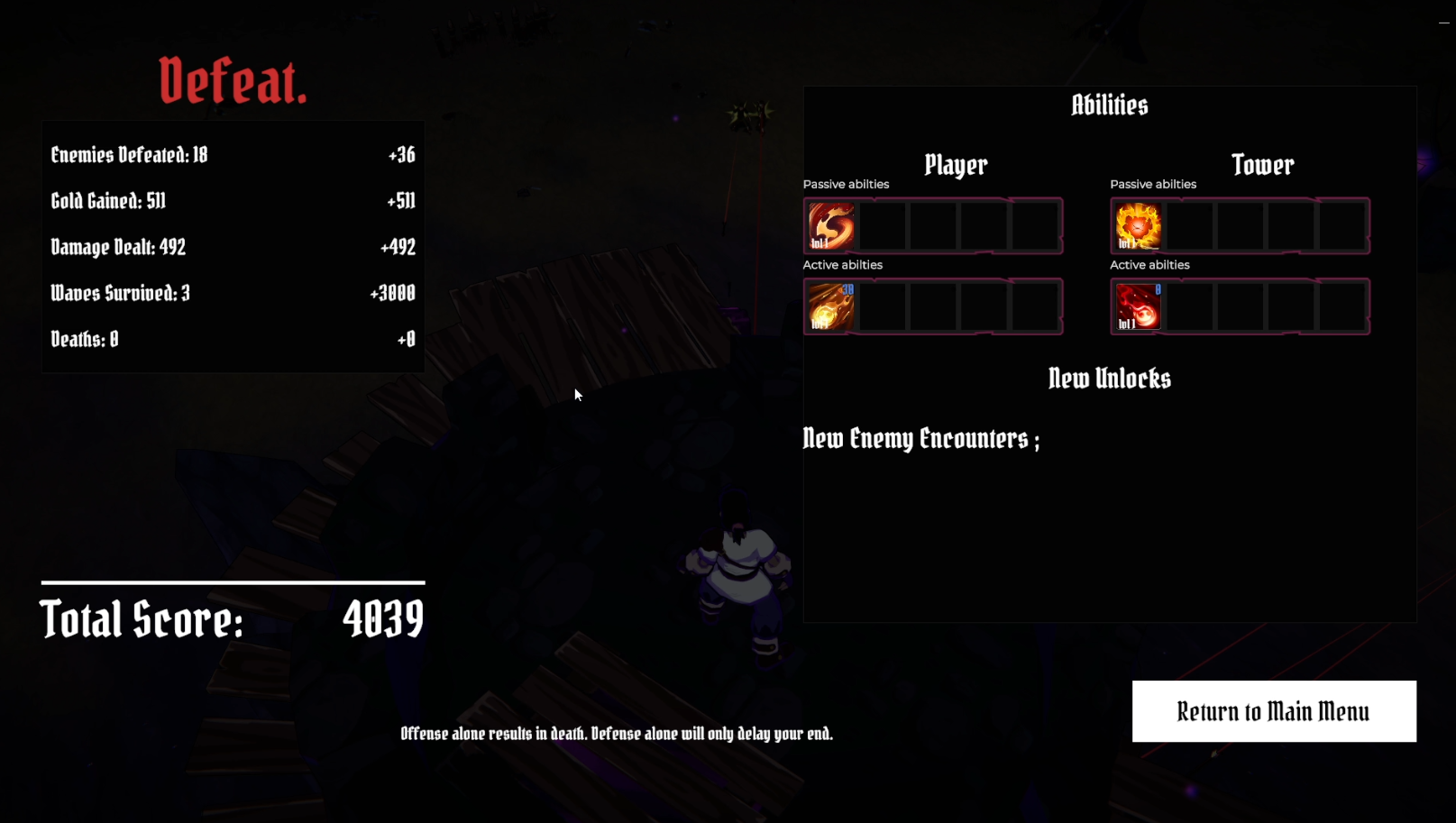
This creates a delayed learning problem. The game retroactively explains systems after the player has already failed instead of teaching the relationships while the systems are being experienced.
Runic Tower build consistency example
A more severe issue appeared during build selection testing. Selecting the Fell Huntress Aspect consistently loaded Infernal Tyrant instead during gameplay.
The mismatch affected both the HUD and the actual gameplay behaviour, meaning the problem was not purely visual. The selected build was not the build the player actually received.
Observed issue: The selected Aspect did not match the loaded gameplay Aspect.
Player-facing risk: Build systems become unreliable because player choice no longer guarantees expected gameplay behaviour.
This kind of issue is especially damaging because build systems rely on trust. Players need confidence that selected abilities, classes, or aspects will behave consistently between selection and gameplay.
Runic Tower Player vs Tower assignment example
Another readability issue involved ability ownership. Aspect abilities were inconsistently assigned between the Player and the Tower across runs.
The game did not explain:
- Why the assignment changed
- Whether the behaviour was intended
- How the assignment rules worked
- How players could influence or control the behaviour
Observed issue: Aspect abilities were inconsistently assigned between Player and Tower with no visible rule or explanation.
Player-facing risk: Players cannot establish reliable gameplay rules, making system behaviour feel arbitrary rather than strategic.
This issue weakens strategic learning because players cannot establish stable system expectations. Without readable rules, experimentation stops feeling meaningful.
Cult of PiN system overlap example
Cult of PiN was tested in v0.11 DEMO on PC. The QA pass focused on ritual clarity, upgrade interpretation, system stacking, timing transitions, and readability under high system overlap.
Cult of PiN showed a related readability issue in a different type of system-heavy game. During normal progression, rituals, multiball, multipliers, boss phases, and upgrade effects could all overlap during active gameplay.
The systems themselves behaved consistently. No major progression, timing, or stacking defects were observed. The issue was not that the systems failed. The issue was that the player could not always identify which action triggered which outcome during high event density.
Observed issue: Multiple systems could trigger correctly at the same time, but the source of each effect was difficult to identify during chaotic gameplay.
Player-facing risk: The player may react to effects without understanding what caused them, reducing their ability to make intentional upgrade, ritual, or positioning decisions.
Cult of PiN system-overlap readability risk
|
This is an important distinction in game QA. A system can be technically stable and still become difficult to read when too many effects compete for the player's attention. In Cult of PiN, the risk was not system failure. It was attribution failure.
The Spare Change ritual also showed a smaller visual consistency issue. The ritual appeared purple in the UI, but produced red electrical effects and a yellow explosion when activated. Because other rituals used more consistent colour mapping, this mismatch reduced the player's ability to identify active effects quickly during overlap-heavy gameplay.
Observed issue: Spare Change used purple UI coding but red and yellow in-game effects.
Player-facing risk: Colour inconsistency weakens quick recognition during high system overlap, especially when several ritual and upgrade effects are active at once.
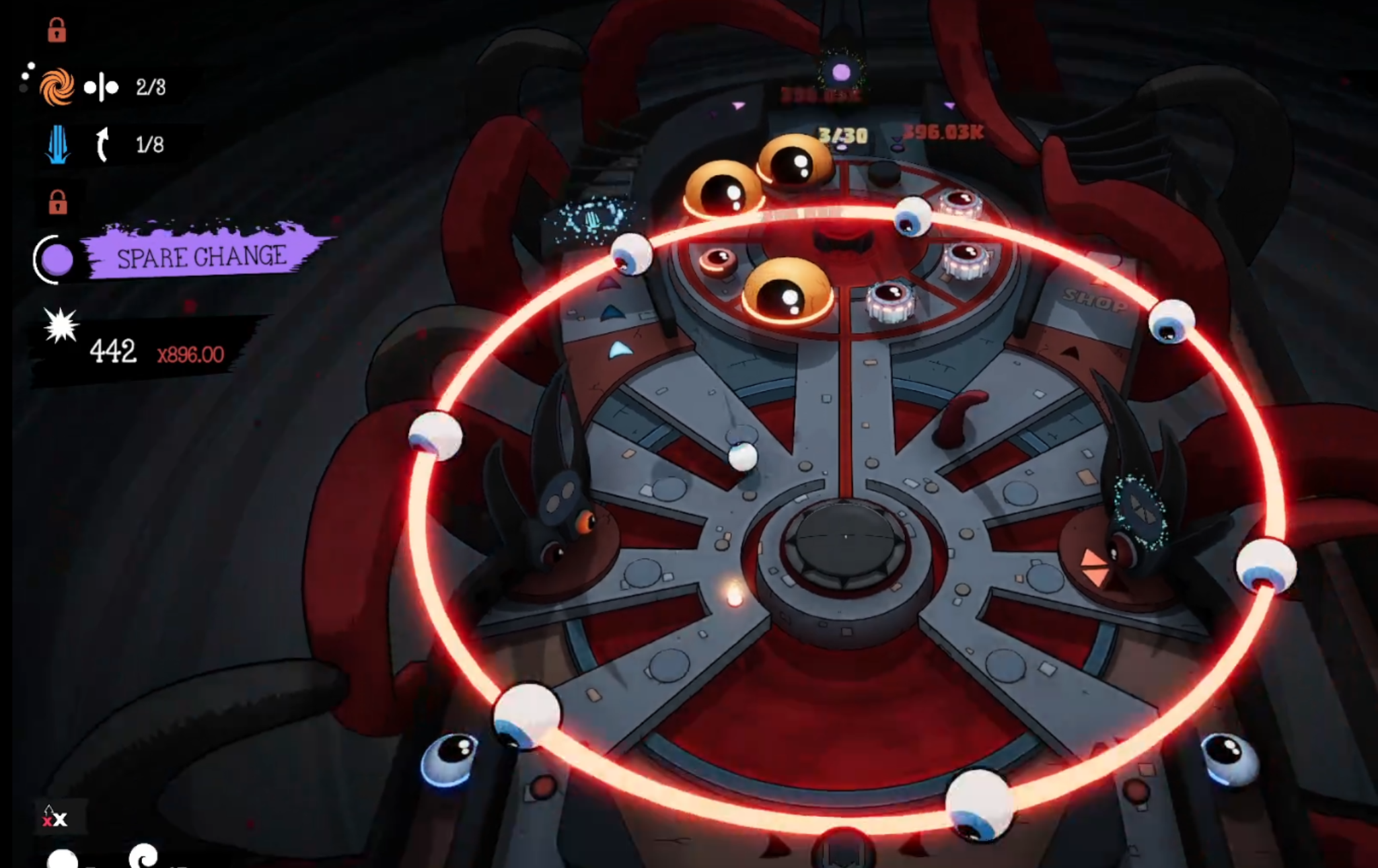
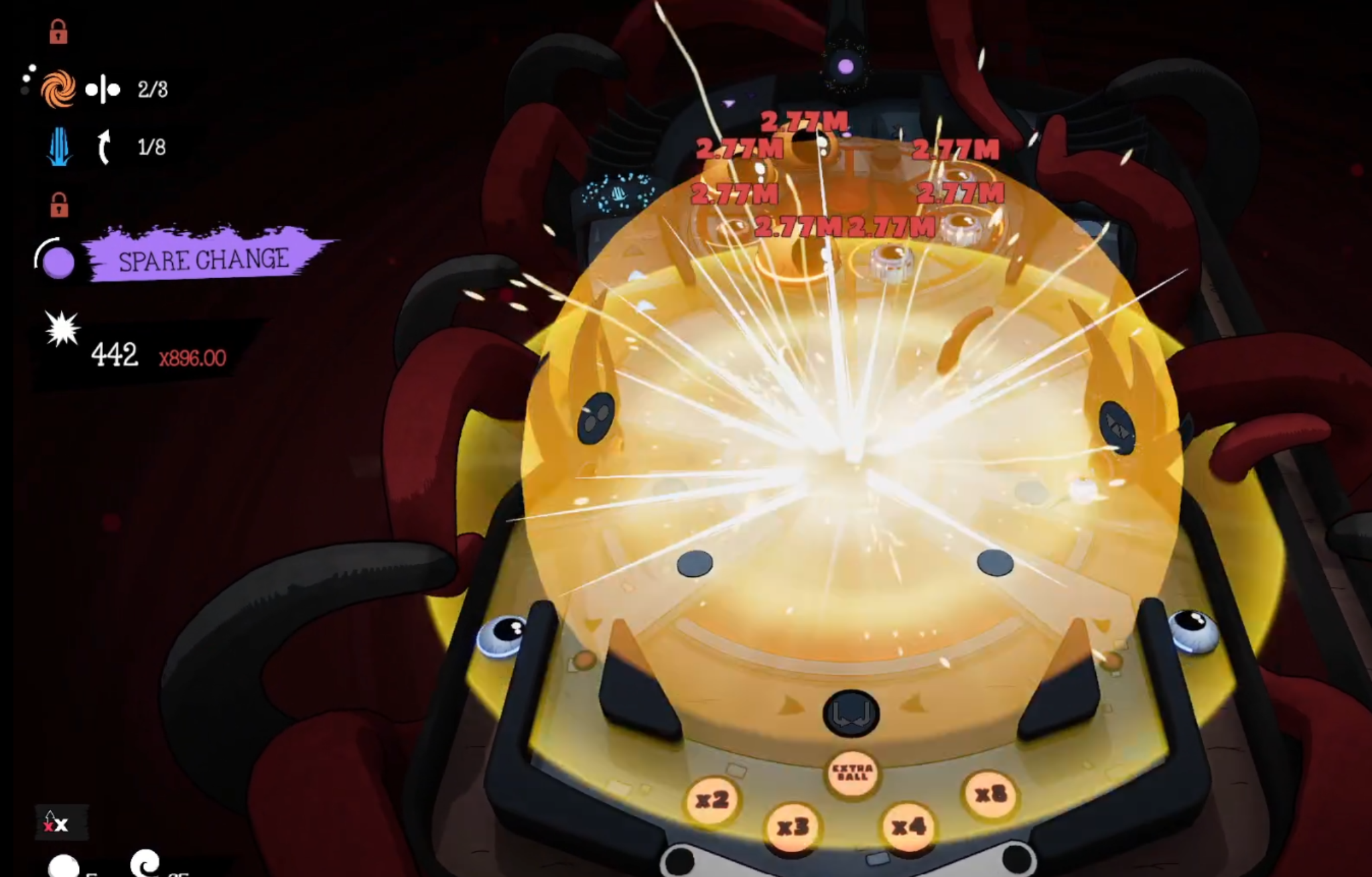
Cult of PiN is useful here because it shows the same player-understanding problem from another angle. Runic Tower struggled with ability source, ownership, and build mapping. Cult of PiN showed how even stable systems can become hard to interpret when overlapping effects make trigger source unclear.
Why this matters in game QA
Ability systems are one of the main ways players interact with complexity. If those systems become unreadable, the player loses the ability to connect action, build choice, and gameplay outcome.
When system relationships are unclear, players may stop trusting their own decisions. That shift matters. A difficult build system can feel rewarding when the player understands why outcomes happen. An unclear build system feels arbitrary because the player cannot identify the rules.
For developers, gameplay readability QA should test more than whether abilities technically work. It should test whether players can identify source systems, understand passive behaviour, track ownership, recognise visual language, and form reliable mental models during gameplay.
For QA testers, this kind of testing demonstrates systems thinking, gameplay readability analysis, player empathy, onboarding awareness, and the ability to explain why technically functional systems may still fail from the player's perspective.
The goal of gameplay readability QA is not to simplify systems. The goal is to make complex systems understandable enough that players are challenged by strategy, not confused by invisible logic.
Ability System Readability FAQ
Why do unclear ability systems confuse players?
Players become confused when ability systems do not clearly communicate what triggered, which system caused the effect, or how passive, active, ritual, and build mechanics interact during gameplay.
What are common gameplay readability problems in games?
Common gameplay readability problems include overlapping effects, hidden passive systems, unclear build ownership, weak cause-and-effect communication, inconsistent system behaviour, poor visual distinction between mechanics, and colour coding that does not match gameplay effects.
How do QA testers test gameplay readability?
QA testers evaluate whether players can understand gameplay systems through feedback, UI communication, system behaviour, visual effects, colour coding, and outcome clarity. This includes testing whether players can identify source systems and understand why gameplay events occur.
Why is build consistency important in games?
Build consistency is important because players need confidence that their selections are being applied correctly. If selected builds behave differently from expected, players lose trust in experimentation and strategic planning.
What is cause-and-effect clarity in game QA?
Cause-and-effect clarity refers to whether players can understand how their actions, selections, and gameplay systems produce visible outcomes. Strong clarity helps players learn systems, make informed decisions, and build trust in gameplay rules.
Related Game QA work
Contact me about game QA testing Connect on LinkedIn Browse more game QA testing articles